Days Bygone - Castle Defense
- 4.7
- Rating
- 5.00M
- Installs
- Free
- Price

 Analysis by App-foxy
Days Bygone - Castle Defense is the kind of action game that can feel surprisingly easy to return to during a spare minute. I found its central idea immediately readable: protect a castle, improve the tools available to you, recruit heroes, and push back enemies that become harder to handle over time. That simple loop gives the game a friendly first impression, but the more important question is whether it remains worth opening after the first burst of curiosity has passed.
My short answer is that it has lasting value for players who enjoy gradual progress and light strategy, although it is less convincing for anyone looking for a tightly directed campaign or constant hands-on action. The game is free, developed by Frivolition, and rated for Everyone 10+, with a 4.7 average from around 67 thousand ratings. Those numbers suggest a broad audience, but they do not remove the need to understand its rhythm before committing to it.
Why the first week feels so rewarding
The opening appeal comes from how quickly each session communicates progress. You are not left wondering what the next goal is: strengthen your defenses, improve your gear, add useful heroes, and survive the next pressure point. I enjoyed that every improvement felt connected to the castle rather than being a disconnected collection of menus. Even when a battle did not go perfectly, there was usually a clear reason to return and make another adjustment.
You May Also Like

 Blood Strike: 2.5 Anniversary
Blood Strike’s Loadouts Turn Every Drop Into a Tactical Gamble
A close look at Blood Strike’s custom loadouts: how fast access to signature weapons reshapes its battle royale rhythm, rewards preparation, and narrows the gap between fights.

 Pandora - Music & Podcasts
Pandora’s Music Is Easy to Start, but Harder to Recover
Pandora’s strength is its low-effort path from a seed to a station. Its weak spot is how much confidence it asks you to place in connection, setup, and quiet recovery.

 8 Ball Pool
 Is Built on Rivalries, Rematches, and Routine
A close look at the rivalries, rematches, shared routines, and unanswered safety questions that turn a quick pool match into a persistent mobile community.

 Samsung Music
’s Quiet Strength Is Playing What You Already Own
Its reach comes less from spectacle than from dependable access to a personal library. That simplicity is both the app’s strongest retention engine and its ceiling.

 AccuWeather: Weather Radar
AccuWeather Review: A Quick, Clear Forecast for Everyday Decisions
For everyday plans, the best forecast is the one you can understand quickly. AccuWeather makes rain timing, radar, and local conditions easy to act on, with a few trade-offs.

 Hill Climb Racing
Why Hill Climb Racing Still Turns Crashes Into One More Run
A tiny car, a bumpy hill and one more upgrade: Hill Climb Racing keeps resurfacing because its simple chaos makes every near-miss feel personal.
More From Our News Desk



This makes the game a natural fit for short sessions. I could imagine playing it while waiting for an appointment, taking a break from work, or winding down before bed. It does not demand the same uninterrupted attention as a long story-driven action game. The appeal is in checking progress, making a practical upgrade, and seeing whether that change carries the defense a little farther.
The first few days also benefit from a useful sense of discovery. New players can experiment with their equipment and heroes without needing to understand every possible long-term decision immediately. That is important because a castle-defense game can easily become intimidating if it presents too many systems before the player has learned the basic rhythm. Here, the core loop is approachable enough that I could learn by playing rather than studying a guide first.
Still, I would not describe the early experience as purely strategic. Much of the satisfaction comes from accumulation: stronger gear, more capable defenders, and a castle that can withstand more punishment. If your favorite games are built around precise timing, complex map control, or dramatic tactical reversals, the first week may feel more like progression management than deep combat.
One useful habit is to avoid spending every resource the moment it becomes available. I found it more sensible to pause and identify the part of the defense that was actually causing a failure. If enemies were reaching the castle too quickly, a general upgrade might be less useful than improving the part of the setup that directly addresses that weakness. This small change in mindset makes the game feel less like random tapping and more like a series of readable problems.
The hero system adds another layer to that decision-making. Recruiting a new hero is exciting, but the best choice is not always the newest available option. A hero that complements the way you already play can be more valuable than one that looks impressive in isolation. I recommend testing changes one at a time, because replacing several elements together makes it difficult to tell which decision helped or hurt.
That approach is especially helpful on a phone. The game works well when you want something that can be understood quickly, but it still gives you enough choices to prevent every session from feeling identical. It is more involved than a purely idle progress app, yet less demanding than a traditional action game that expects full concentration every minute.
What remains interesting after the novelty
The longer-term appeal depends on whether you enjoy watching small improvements compound. Days Bygone does not need a dramatic new idea every session if you like the feeling of gradually converting an underpowered defense into a reliable one. I found the most satisfying moments came after a modest adjustment finally made a previously uncomfortable stage manageable.
That creates a practical month-to-month routine. I would play a few sessions, notice where progress had slowed, reconsider the setup, and then return after improving the most relevant part of the defense. The routine is not about mastering one perfect arrangement. It is about learning what the current obstacle is asking for and deciding whether to improve the existing plan or try a different one.
The game also suits players who prefer progress that can be revisited rather than completed in one sitting. A short session still contributes to a larger goal, which makes it easier to keep the game in rotation. In my experience, that is more sustainable than a game that only feels rewarding when I have a large block of free time.
However, the same structure can become repetitive. The basic activity remains centered on defending the castle and improving the tools used to do so. If you need a constantly changing set of objectives, a strong narrative, or a large variety of environments, the recurring loop may eventually feel narrow. The game’s strength is consistency, and consistency can also be its main limitation.
Compared with a conventional action game, this is a calmer and more methodical choice. You are not mainly chasing fast reactions or elaborate movement. Compared with a pure idle game, it asks more from you because your decisions about gear, heroes, and upgrades matter. That middle position is useful: it gives the game more personality than an automatic progress simulator without turning every session into a demanding challenge.
One of my favorite ways to use it would be as a companion game rather than a sole mobile game. I would not expect it to replace a story-heavy adventure or a competitive action title. Instead, it works between those experiences, offering a dependable progression loop when I want to play but do not want to learn a new control scheme or invest in a long match.
The audience size also makes sense in that context. The game has passed five million installs, which reflects how accessible its format is. Yet popularity should not be confused with universal appeal. A player who dislikes repeated upgrading will probably notice the repetition sooner than someone who enjoys optimizing a growing collection of tools and defenders.
The real maintenance cost of keeping it installed
The biggest maintenance burden is not the controls; it is attention. To get the most from the game, I need to check which upgrade is meaningful, notice when a hero is no longer fitting the current challenge, and avoid treating every available purchase as equally valuable. That is manageable, but it means the game is not completely hands-off.
There is also a mental cost to returning after a break. If I leave the game alone for a while, I may need a few minutes to remember what I was trying to improve and why my current setup was chosen. A simple note to myself about the next objective can make the return smoother. This is a small but useful trick for any progression game that is played irregularly.
The free entry point helps, but the presence of optional purchases from $0.99 to $49.99 per item changes how I evaluate the experience. I would approach the store carefully and decide in advance whether I am willing to spend anything. The game is easier to enjoy when purchases remain a personal choice rather than a response to frustration after a difficult stretch.
That does not mean every player will have the same experience of progression. Someone who is comfortable waiting, experimenting, and accepting slower advancement may find the free structure perfectly reasonable. Someone who wants to remove every obstacle immediately may feel pressure to spend. My advice is to treat purchases as a convenience decision, not as a requirement for proving that your strategy is good.
The current version is 2.9.2, and the game’s original release was on April 9, 2019. That history matters because this is not a brand-new novelty that has only just appeared. It has had time to establish its particular style of progression. For a player choosing a game to keep around, that maturity is reassuring, although it also means the basic design is unlikely to transform into a completely different kind of experience.
On the technical side, the game supports devices running Android 6.0 or later. That makes it accessible to many older phones, but I would still leave enough free storage and keep the operating system reasonably maintained. Progression games are especially frustrating when interruptions or poor device performance break the habit of checking in, so a stable setup matters more than it might seem.
Where fatigue starts to appear
My main concern is the possibility of upgrade fatigue. At first, every improvement has a visible purpose. Later, the difference between a worthwhile upgrade and a merely available upgrade may require more patience. If progress slows, the player can begin repeating the same actions without feeling that a meaningful decision was made.
This is where disciplined play helps. Rather than upgrading automatically, I would set a small goal for each session: improve survivability, increase offensive pressure, or test one hero change. That keeps the game from turning into a mechanical routine. It also makes failure more informative because I know what I was trying to change.
Another source of fatigue is the narrowness of the central fantasy. The castle-defense theme is clear and coherent, but players who need frequent shifts in perspective may find it too focused. There is no reason to choose this game if what you really want is a cinematic campaign, a social competition, or a fast multiplayer match. Those alternatives provide stronger variety in areas where Days Bygone intentionally stays compact.
The age rating of Everyone 10+ gives it a broad family-friendly position, but younger players may still need guidance around optional spending and repeated play. I would be comfortable recommending it to a teenager who enjoys progression strategy, while making sure they understand that free games can include paid items. For adults, the more relevant question is whether the loop feels relaxing or like another obligation to maintain.
I also would not recommend it to someone who wants a game that can be finished cleanly. The design is better understood as an ongoing hobby than a short adventure with a final satisfying endpoint. That can be a strength for players who like persistent goals, but it is a poor match for anyone who prefers to complete a campaign and move on.
One non-obvious trade-off is that playing less can sometimes make the game feel better. If I open it too frequently without a clear purpose, the routine loses its sense of progress. Short, intentional visits preserve the feeling that each session has a reason. In contrast, forcing myself to check every available opportunity can turn a pleasant game into a chore.
A second useful insight is to judge an upgrade by the problem it solves, not by its apparent size. A large-looking improvement may be less valuable than a smaller change that fixes the exact point where the defense breaks down. This is the kind of lesson the store summary cannot communicate, and it is central to keeping the strategy from becoming guesswork.
A third is that the best long-term setup may not be the most comfortable short-term setup. Experimenting with heroes or gear can temporarily reduce performance while revealing a stronger direction. I would make those tests when I have room to recover, rather than immediately before an important push. That simple timing choice reduces frustration and makes experimentation more practical.
Who should keep it for the long run?
After spending time with it, I see Days Bygone - Castle Defense as a dependable progression game rather than an essential action masterpiece. Its lasting value comes from the relationship between small decisions and gradual improvement. I like that it can fill a short break, but I also appreciate that it gives me enough control to think about why a defense succeeds or fails.
I would recommend it to players who enjoy upgrading equipment, building a roster of heroes, and returning to a familiar challenge with a better plan. It is particularly suitable for someone who wants an action game that does not require constant intensity. The free price makes trying it easy, and the age rating keeps its presentation broadly approachable.
I would suggest skipping it if you need a strong narrative, dramatic variety, or a clear final completion point. I would also be cautious if recurring upgrade loops tend to make you feel pressured to spend or check in constantly. In those cases, a premium action game with a defined campaign may offer better value, even if it provides fewer reasons to return every day.
For everyone else, the deciding test is simple: do you enjoy making one sensible improvement and seeing how far it carries you? If yes, the game has a good chance of earning a permanent place on your phone. If the answer is no, its approachable opening will probably not overcome the repetition that appears later.
My final view is positive but measured. Frivolition has built a game with a clear identity, a welcoming entry point, and enough strategic choice to support a regular habit. Its weaknesses are equally clear: repeated progression can become maintenance, optional purchases require self-control, and the core activity does not offer unlimited variety. I would keep it installed as a relaxed companion game, not as my only mobile action experience.
In practical terms, I would start without spending, play in short purposeful sessions, and make upgrades in response to specific problems. That approach preserves the game’s best quality: the feeling that progress comes from understanding your defense rather than simply pressing forward. For the right player, that is enough to make the castle worth defending well beyond the first week.
FAQs for Days Bygone - Castle Defense
01What is Days Bygone - Castle Defense?
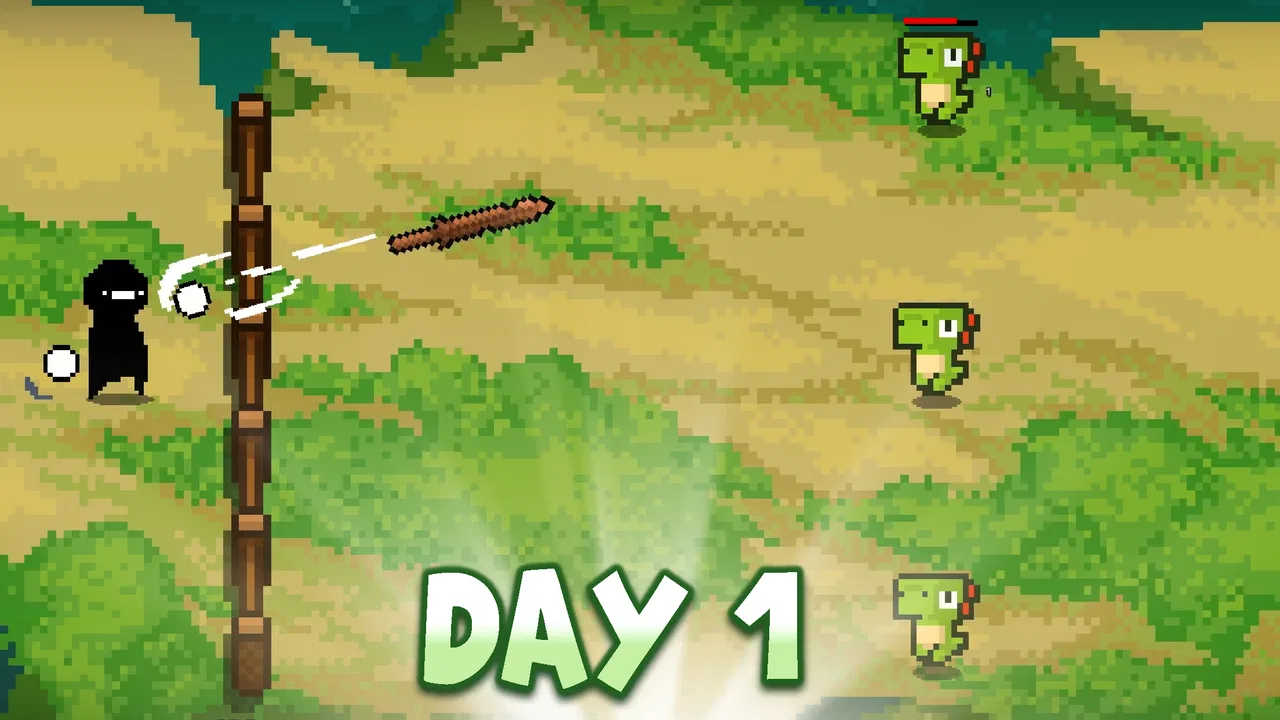
Days Bygone - Castle Defense is a side-scrolling tower defense and idle RPG for Android and iOS. You defend your castle against increasingly powerful waves of enemies, unlock heroes, upgrade weapons, and improve defensive abilities. The game combines active combat with progression systems that continue helping you advance even when you are not constantly playing.
02Is Days Bygone - Castle Defense free to play?
Yes, Days Bygone - Castle Defense can be downloaded and played for free. However, it includes optional in-app purchases that may provide premium currency, bundles, or other progression-related benefits. You can make steady progress without paying, although later stages may require more patience, repeated upgrades, and careful resource management, especially if you want to compete at a faster pace.
03Does the game require an internet connection?
Days Bygone is primarily designed as a mobile game with online features, including advertisements, cloud-related services, events, and purchases. Some parts may remain accessible offline, but the complete experience can depend on an internet connection. Connecting regularly is recommended so your progress, rewards, updates, and account data can synchronize correctly.
04What kind of gameplay and progression does it offer?
The main gameplay involves defending your castle against waves of enemies by using weapons, spells, heroes, and defensive upgrades. As you progress, you unlock stronger equipment and additional systems that affect your strategy. The game also includes idle rewards, allowing certain resources to accumulate over time, while active play helps you push further through difficult stages.
05Is Days Bygone suitable for casual players and younger users?
Days Bygone is accessible to casual players because its controls are straightforward and its idle progression reduces the need for constant play. Nevertheless, the game contains frequent combat, fantasy violence, advertisements, and optional purchases. Parents should review the app’s age rating and device purchase settings, while players who dislike grinding or repeated upgrade management may find the later progression demanding.
Pros
- Simple controls make the game easy to pick up on mobile.
- Offline play lets you progress without a constant internet connection.
- Frequent events add variety beyond the main wave-based battles.
- Hero and weapon choices support different defensive playstyles.
- Prestige mechanics give long-term goals after difficult stages.
Cons
- Progress can slow considerably without careful resource management.
- Some upgrades and rewards may feel heavily influenced by grinding.
- The screen can become crowded with effects during intense waves.
- New players may find the many currencies and systems confusing.
- Late-game content may require patience or optional purchases to advance.

Days Bygone - Castle Defense
Gallery